01
GCs check capacity and schedule
A general contractor's purchasing agent needs to know whether you can put the crews and equipment on their job in their window. Fleet, crew count and current capacity are the questions.
Concrete & Excavation Websites
Concrete and excavation companies serve general contractors and homeowners at the same time, and those two audiences want opposite things from a website.
Who this is for
Concrete contractors, excavation and earthworks companies, civil and heavy construction firms working a mix of commercial and residential.
Buying behaviour
This is the part that changes the build. Everything below follows from it.
01
A general contractor's purchasing agent needs to know whether you can put the crews and equipment on their job in their window. Fleet, crew count and current capacity are the questions.
02
A driveway or a basement is a local search, a map pack, three quotes. Completely different funnel, completely different page.
03
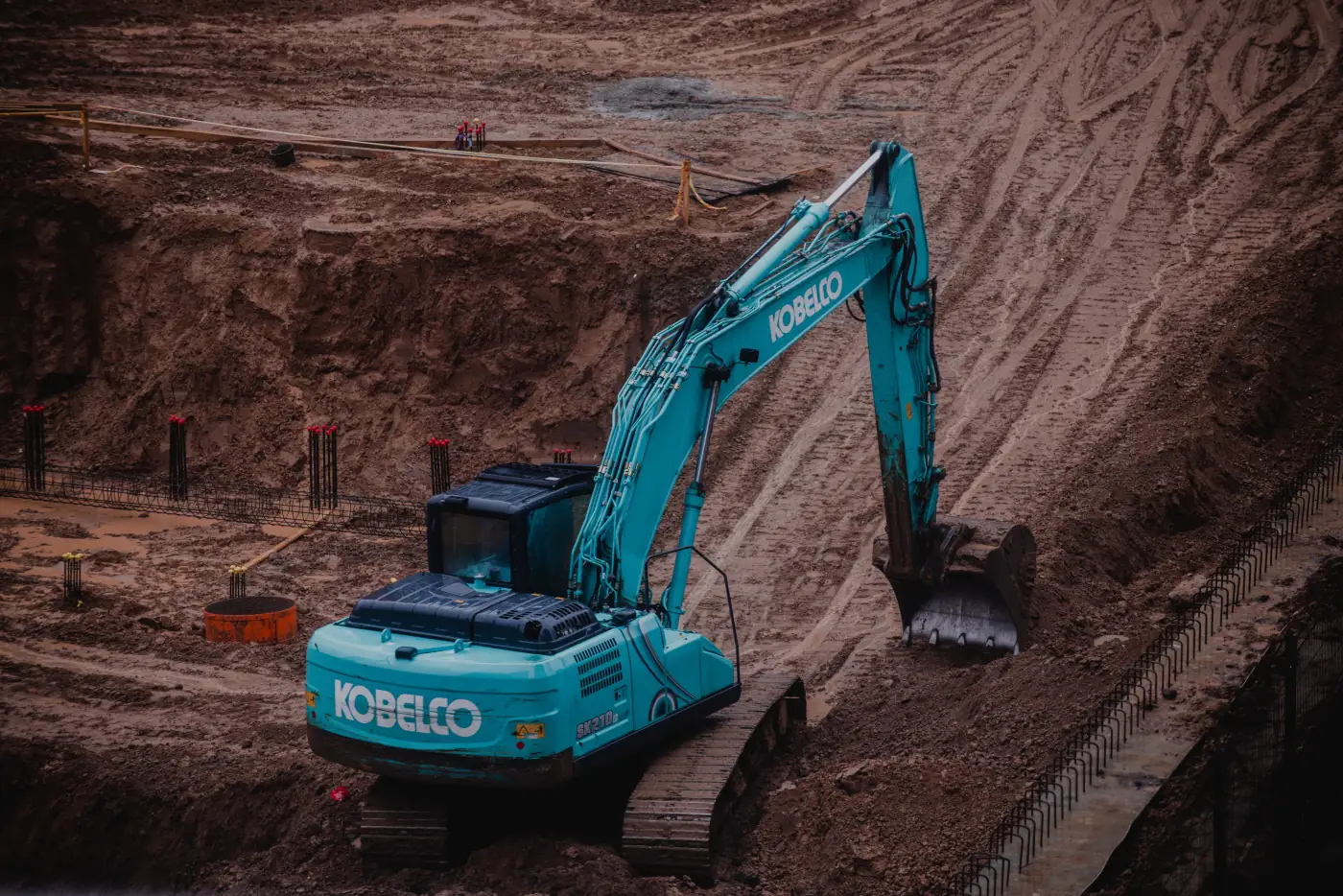
In earthworks the fleet list does real persuading. It tells a GC what you can self-perform and what you would have to sub out.
04
In Alberta the window is short. Both audiences are making decisions under time pressure, and a slow enquiry response costs you the season.
The brief
Common mistakes
What we build
Two entry points, two service trees, two conversion mechanisms. A GC and a homeowner should never end up on the same page wondering whether they are in the right place.
Machines, capacities and what they let you self-perform. This is the page GCs actually read.
Crew count, typical mobilisation window, and current availability where you are willing to state it.
Scope, value band, GC you worked under where permitted, duration and conditions.
Qualifying fields — scope, square footage, access, timing — plus photo upload, so estimates stop starting from zero.
A page per municipality you genuinely work in, which matters more here than in almost any other sector.
Services that apply here
Project portfolios, a credentials module, a careers pathway and a capability profile a procurement desk can actually use.
Segmented honestly: local search for trades, recruitment and referral validation for commercial and industrial contractors.
Scheduled maintenance rather than emergency callout. Updates, backups, uptime, security, and your portfolio kept current.
Capability statements, project write-ups and sector pages written by people who know CM-at-risk from design-build.
Almost never separate sites — that splits your search authority and doubles your maintenance. Separate paths within one site is the right structure: distinct entry points, distinct service pages, distinct conversion mechanisms, shared credibility.
If you do commercial subcontract work, yes. A purchasing agent deciding whether to invite you is assessing what you can self-perform, and a fleet list answers that faster than a phone call.
Say so, and give people a way to get into next season's queue. A site that keeps soliciting enquiries you cannot service burns goodwill and wastes your office staff's time.
Less than for residential, but not zero — GCs do search for subs by trade and city, particularly when they are working outside their usual area. The bigger commercial win is usually being findable when someone checks a name they were given.
The slow season is when to build it — project write-ups from the year, equipment pages, service-area content. Contractors who publish in January are the ones ranking in April.
The library
Construction SEO
Learn how contractors can structure Google Ads campaigns, choose keywords, manage budgets, and track qualified construction leads with confidence.
Maintenance
Build a practical construction lead scoring system to rank, route, and follow up on website leads in your CRM using fit, intent, and behaviour.
Construction SEO
Learn how contractors can connect website leads to won projects with CRM data, call tracking, GA4, and practical attribution workflows.
A free audit, assessed against this sector rather than a generic checklist. Speed, mobile, SEO, conversion paths and credibility gaps, plus a comparison against two competitors.